How to Check Pregnancy at Home: A Complete, Step-by-Step Guide
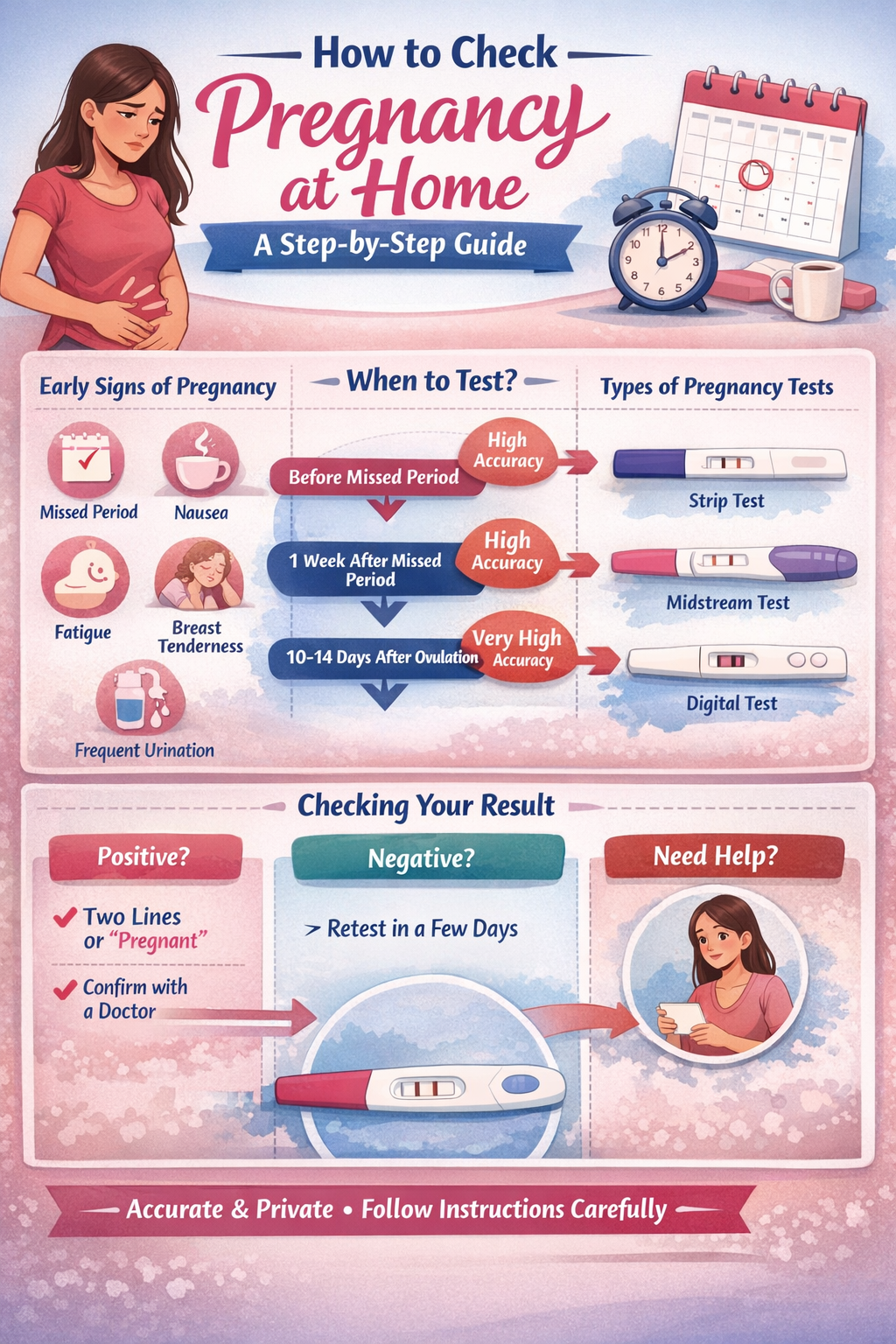
Checking pregnancy at home is often the first step for many people who notice changes in their body or miss a menstrual period. Thanks to modern medical advancements, it is now possible to detect pregnancy quickly, privately, and affordably from the comfort of home using reliable methods such as pregnancy test strips and other home-based approaches.
This detailed guide explains how to check pregnancy at home, how accurate different methods are, when to test, common mistakes to avoid, and what to do after a positive or negative result. The article is structured to help readers understand the topic clearly while following best practices for health awareness.
Table of Contents
- What Is Pregnancy?
- Early Signs and Symptoms of Pregnancy
- When Is the Right Time to Check Pregnancy?
- How Home Pregnancy Tests Work
- How to Use a Home Pregnancy Test (Step-by-Step)
- Types of Home Pregnancy Tests
- Natural Home Pregnancy Test Methods (Myths vs Facts)
- Accuracy of Home Pregnancy Tests
- Common Mistakes While Testing at Home
- What to Do After a Positive Result
- What to Do After a Negative Result
- When to See a Healthcare Professional
- Frequently Asked Questions (FAQs)
- Final Thoughts
1. What Is Pregnancy?
Pregnancy occurs when a fertilized egg attaches itself to the lining of the uterus. This process is called implantation and usually happens 6–10 days after ovulation.
Once implantation occurs, the body begins producing a hormone called human chorionic gonadotropin (hCG). This hormone is the key marker detected by pregnancy tests.
Key pregnancy-related entities:
- Pregnancy
- hCG hormone
- Implantation
- Ovulation
- Menstrual cycle
- Uterus
2. Early Signs and Symptoms of Pregnancy
Before taking a test, many people notice early physical or emotional changes. These symptoms vary from person to person.
Common Early Pregnancy Symptoms
| Symptom | Description |
| Missed period | One of the most common early signs |
| Fatigue | Increased tiredness due to hormonal changes |
| Nausea | Often called morning sickness |
| Breast tenderness | Swelling or soreness |
| Frequent urination | Caused by hormonal shifts |
| Mood changes | Emotional sensitivity |
| Mild cramping | Implantation-related discomfort |
⚠️ Note: These symptoms are not definitive proof of pregnancy and can occur for other reasons.
3. When Is the Right Time to Check Pregnancy?
Timing plays a critical role in getting accurate results.
Best Time to Test
| Timing | Accuracy |
| Before missed period | Low accuracy |
| On the day of missed period | Moderate accuracy |
| 5–7 days after missed period | High accuracy |
| 10–14 days after ovulation | Very high accuracy |
Testing too early may lead to a false negative because hCG levels may still be low.
4. How Home Pregnancy Tests Work
Home pregnancy tests detect the presence of hCG hormone in urine. When hCG is present at detectable levels, the test shows a positive result.
How Detection Works
- Urine comes into contact with the test strip.
- Antibodies on the strip react to hCG.
- A visible indicator appears (lines, symbols, or digital text).
5. How to Use a Home Pregnancy Test (Step-by-Step)
Follow these steps for accurate results:
- Check the test’s expiry date
- Use the first urine of the morning (highest hCG concentration)
- Collect urine in a clean container or urinate directly on the test
- Wait for the specified time (usually 1–5 minutes)
- Read results within the recommended time window
Reading Results
| Result Type | Meaning |
| Two lines / “Pregnant” | Positive |
| One line / “Not Pregnant” | Negative |
| No line / Error | Invalid test |
6. Types of Home Pregnancy Tests
Different types of tests are available for home use.
Comparison Table
| Type | Features | Accuracy |
| Strip tests | Simple, cost-effective | High |
| Cassette tests | Requires dropper | High |
| Midstream tests | Easy to use | High |
| Digital tests | Displays words | Very high |
All types detect hCG hormone, but digital tests may reduce confusion in reading results.
7. Natural Home Pregnancy Test Methods: Myths vs Facts
Some people search for natural or traditional methods to check pregnancy at home. These methods lack scientific evidence.
Common Myths
| Method | Scientific Validity |
| Sugar test | ❌ Not reliable |
| Salt test | ❌ No medical proof |
| Toothpaste test | ❌ Myth |
| Baking soda test | ❌ Inaccurate |
⚠️ These methods should not replace medical-grade pregnancy tests.
8. Accuracy of Home Pregnancy Tests
Home pregnancy tests are highly accurate when used correctly.
Accuracy Breakdown
| Condition | Accuracy Rate |
| After missed period | 97–99% |
| Early testing | 60–85% |
| Incorrect usage | Reduced accuracy |
Factors affecting accuracy:
- Testing too early
- Diluted urine
- Expired test
- Not following instructions
9. Common Mistakes While Testing at Home
Avoid these common errors:
- Testing before hCG levels rise
- Drinking too much water before testing
- Reading results too late
- Using expired kits
- Ignoring instructions
Correct usage significantly improves reliability.
10. What to Do After a Positive Result
If your home test is positive:
- Stay calm and confirm with a healthcare professional
- Schedule a blood test or ultrasound
- Begin prenatal care if confirmed
- Maintain a balanced diet and healthy routine
Early medical confirmation ensures proper guidance and care.
11. What to Do After a Negative Result
If the result is negative but symptoms persist:
- Wait 3–5 days and test again
- Use first-morning urine
- Track menstrual cycle
- Consult a healthcare provider if periods remain irregular
12. When to See a Healthcare Professional
Seek medical advice if:
- You receive conflicting test results
- Periods are absent for over 2 months
- Severe pain or unusual symptoms occur
- You need confirmation or guidance
A healthcare provider can perform blood tests, which detect hCG earlier than urine tests.
13. Frequently Asked Questions (FAQs)
Can stress delay a period?
Yes, stress can affect hormonal balance and delay menstruation.
Can medications affect pregnancy test results?
Most medications do not, except fertility-related treatments containing hCG.
How early can pregnancy be detected?
As early as 10 days after ovulation, though accuracy improves after a missed period.
14. Final Thoughts
Checking pregnancy at home is a simple, private, and reliable process when done correctly. Understanding the right timing, choosing the correct test, and following instructions carefully can help ensure accurate results.
While home pregnancy tests provide quick answers, medical confirmation is essential for proper care and peace of mind. Avoid relying on myths or unverified methods, and always prioritize health and accurate information.