BEST Smartphone Gimbal of 2025? DJI OM7P vs Insta360 Flow 2 Pro
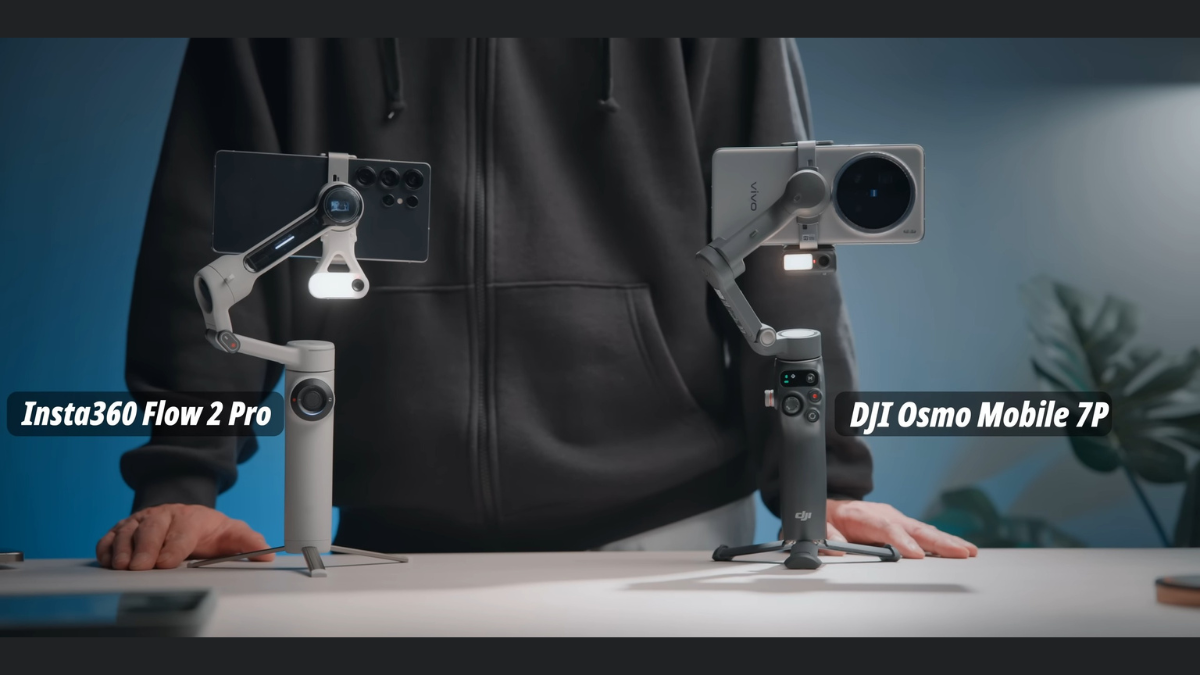
Choosing the right phone gimbal in 2025 is more important than ever for mobile creators who want stable, cinematic results without carrying bulky equipment. Today’s users wish for portability, reliability, smart tracking, and robust stabilization, all packed into a device that fits in a jacket pocket. This comparison between the DJI OM7P and the Insta360 Flow 2 Pro focuses on what real users value most, helping buyers confidently choose the BEST Smartphone Gimbal of 2025.
Phone Gimbal Design & Build Quality: What Defines Premium Hardware
Modern creators expect their phone gimbal to feel durable while remaining lightweight enough for all-day use. Both the DJI OM7P and the Insta360 Flow 2 Pro embrace this expectation, yet they achieve it through different engineering philosophies. DJI continues its tradition of a compact, foldable body that prioritizes portability. At the same time, Insta360 is moving toward a more integrated design, with an extended handle that improves grip comfort during long shooting sessions. The Flow 2 Pro also enhances heat management, which allows the motors to maintain peak performance during extended recording.
These design differences matter more than aesthetics. A phone gimbal must maintain torque stability regardless of device weight or shooting angle. The OM7P focuses on balanced portability, while the Flow 2 Pro strengthens rigidity to support heavier smartphones commonly used for 4K and 8K recording. Users ultimately benefit from dependable stability that holds up in challenging environments.
phone gimbal Stabilization Performance and Core Algorithms
The stabilization engine is the technology that determines whether a phone gimbal can deliver footage that looks truly cinematic. DJI’s OM7P introduces an upgraded 7th-generation algorithm with predictive motor control, which dramatically improves performance during fast movements. It excels in sports scenarios, fast panning, and action-heavy scenes. On the other hand, Insta360’s Flow 2 Pro builds on its deep-learning-powered tracking engine, optimizing motor response through scene analysis. This gives users smoother motion when walking or capturing everyday vlogging moments.
Both brands deliver exceptional results, yet their strengths differ. The OM7P stands out for fast-reaction stabilization, while the Flow 2 Pro shines in slow, controlled shots and creative arcs. Transitioning from movement to still framing feels smoother on the Flow 2 Pro due to its refined damping profile. These distinctions highlight how deeply the phone gimbal market has matured, offering users highly refined options for different shooting styles.
phone gimbal Intelligent Tracking, AI Features, and User Interaction
AI tracking has become one of the most important features for buyers choosing a phone gimbal in 2025. DJI’s ActiveTrack 7P offers more responsive subject framing, particularly when subjects move unpredictably or partially leave the frame. Its face reacquisition is noticeably faster, making it ideal for run-and-gun vloggers. Insta360’s DeepTrack 3.0 takes a different approach, emphasizing multi-mode scene tracking that includes improved gesture control and dynamic zoom features. User interaction also plays a key role. The Flow 2 Pro’s SmartWheel provides tactile control for zoom, switching modes, and adjusting creative effects without relying on the app. DJI relies more on gesture-based switching, voice prompts, and its upgraded app interface. Both systems perform well, yet users who enjoy tactile feedback may find Insta360’s approach more intuitive. This balance of AI refinement and user control helps elevate the 2025 phone gimbal experience beyond basic stabilization.
Phone Gimbal Battery Life, Power Efficiency, and Real Use Durability
Battery longevity remains a decisive factor in customers’ phone gimbal choices. Insta360’s Flow 2 Pro offers one of the most extended power cycles in the category, frequently reaching more than a day of real-world use depending on shooting conditions. Its optimized battery management system keeps heat under control even during extended AI tracking or time-lapse recording.
DJI’s OM7P improves efficiency through enhanced motor algorithms rather than sheer battery capacity. As a result, it performs impressively in short to medium recording periods, maintaining consistent torque output while reducing power spikes. Both models offer dependable all-day performance for hobbyists and professionals alike, yet power users may find the Flow 2 Pro slightly more appealing for long remote shoots.
Phone Gimbal App Ecosystems and Content Creation Tools
A robust phone gimbal depends heavily on software. DJI’s OM7P app ecosystem focuses on streamlined content creation with automated shot guides and improved stabilization profiles tailored for social media platforms. Its pre-programmed shooting templates help beginners get consistent results with minimal setup. The OM7P continues DJI’s tradition of blending professional control with accessible presets.
Insta360 takes a different path by emphasizing creative editing tools and deeper camera integration. The Flow 2 Pro’s app supports advanced time-lapse features, dynamic tracking edits, and integrated cloud upload workflows. Its editing interface is particularly user-friendly for creating fast-turnaround content for TikTok, YouTube Shorts, and Instagram Reels. With stronger built-in automation and transitions, it encourages creators to experiment more freely.
Phone Gimbal Portability, Setup Process, and Daily Convenience
Ease of use remains a top consideration when choosing the BEST Smartphone Gimbal of 2025. DJI continues to lead in ultra-fast setup. The OM7P unfolds smoothly and automatically balances more easily thanks to its optimized clamp design. Its compact profile makes it ideal for creators who want quick access to shooting without complex adjustments.
The Insta360 Flow 2 Pro offers a more robust structure, making it slightly heavier but delivering better handling for long recordings. Its integrated tripod legs allow creators to switch between handheld and stationary shooting effortlessly. The added stability inspires confidence during slow pans, low-angle shots, and self-recording sequences.
Phone Gimbal Final Verdict: Choosing the BEST Smartphone Gimbal of 2025
Both the DJI OM7P and the Insta360 Flow 2 Pro represent the best advancements in the modern phone gimbal market. DJI offers unmatched speed, portability, and predictive stabilization ideal for dynamic creators. Insta360 delivers superior AI tracking, longer battery life, and a more creative software ecosystem. Each model excels in different user scenarios, making the “best” choice dependent on individual shooting needs. For users who prioritize fast setup, lightweight design, and action-ready stabilization, the DJI OM7P stands out. For those who value long battery life, creative flexibility, and stable extended shooting, the Insta360 Flow 2 Pro becomes the stronger option. In either case, buyers in 2025 can expect exceptional stability, professional-grade performance, and intelligent features that elevate their mobile filmmaking experience.